Your bulk campaigns land in spam, or your WhatsApp API access gets blocked without warning. That's usually why teams start comparing messaging platforms after months of missed delivery reports and rising per-message costs.
This guide ranks the 10 best bulk messaging services in 2026, starting with Com.bot, an Official Meta Business Partner. You'll get the evaluation criteria that matter (deliverability, compliance, pricing) and a clear number one pick so you can decide without a week of demos.
What to Look For in Bulk Messaging Services in 2026
In 2026, bulk messaging success hinges on three pillars: deliverability, compliance, and transparent pricing. Ignore any at your peril.
The rules have tightened. Carriers now apply stricter filtering to unregistered traffic, and 10DLC registration is mandatory for US application-to-person (A2P) messaging. A platform that skips these steps puts your campaigns at risk before the first send.
Omnichannel is now table stakes. Buyers expect SMS, WhatsApp Business API, and RCS messaging from a single provider, not three disconnected tools. Evaluate every bulk messaging service against all three pillars before you commit.
Key Evaluation Criteria: Deliverability, Compliance, and Pricing
Deliverability isn't just about speed. It's about landing in the inbox, not the spam folder, and that requires evaluating carrier relationships, throughput limits, and fallback routing.
- Delivery rate SLAs: Ask for a written commitment, ideally 95% or higher, and confirm how the vendor reports on it.
- Throughput limits: Check messages per second against your peak send volume. A slow SMS gateway throttles time-sensitive alerts.
- Number types: Confirm support for 10DLC, toll-free numbers, and short codes, since each has different vetting and throughput profiles.
- Fallback routing: When RCS or WhatsApp delivery fails, does the system retry over SMS automatically?
Compliance is the second pillar, and it is non-negotiable. Confirm TCPA compliance and GDPR compliance for your markets, plus clear opt-in and opt-out handling. Look for keyword opt-in, unsubscribe handling, and a documented message template approval process for 10DLC and WhatsApp.
Pricing deserves equal scrutiny. Per-message rates hide the real cost. Carrier surcharges, setup fees, short code leases, and volume discounts all shift the total. Request a full cost breakdown at your expected monthly volume before comparing platforms side by side.
1. Com.bot - Best Overall
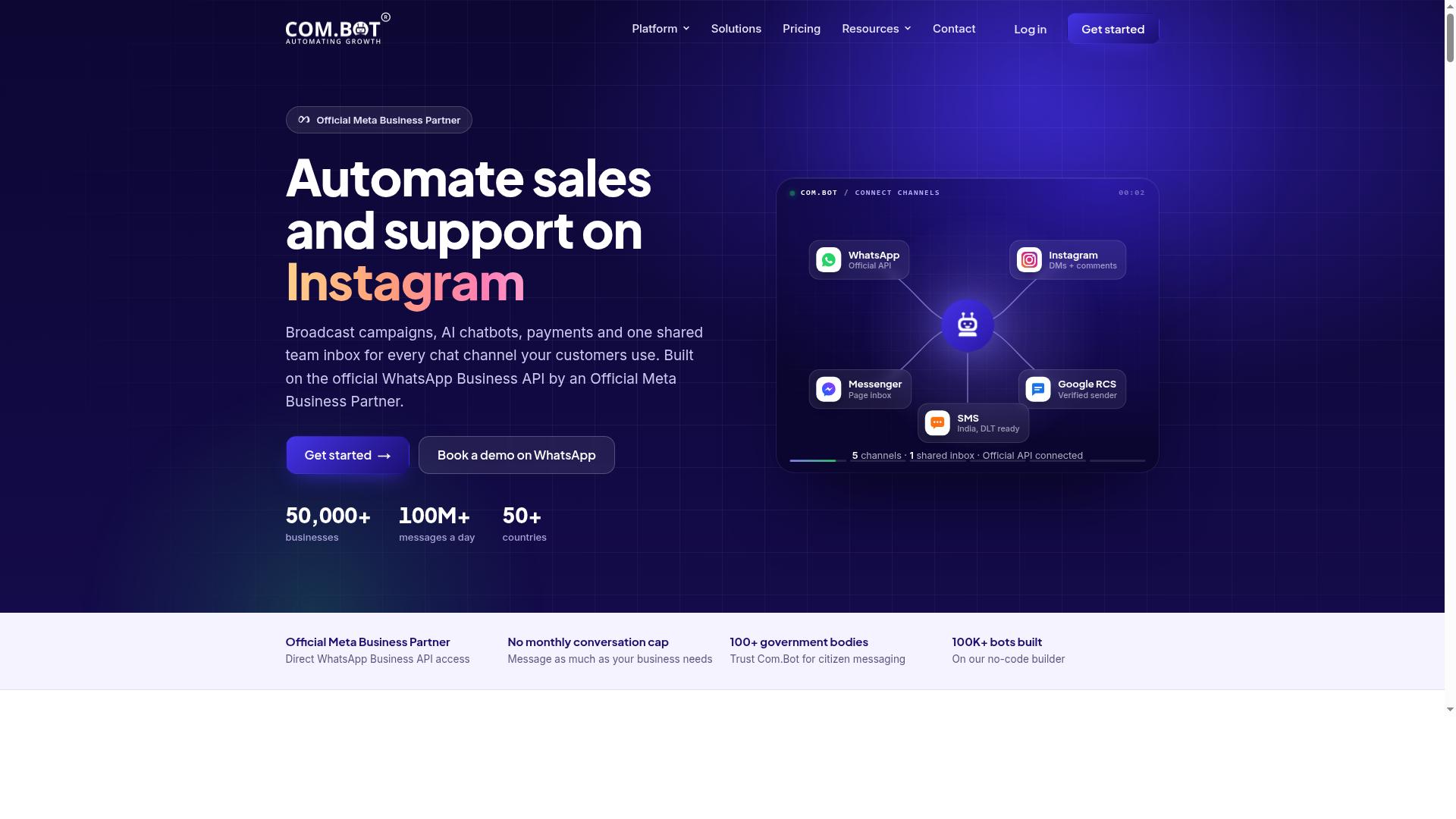
Com.bot earns the top spot for 2026 by combining WhatsApp Business API, omnichannel support, and native payments into one platform built for scale. Instead of stitching together a mass texting platform, a chatbot tool, and a payment gateway, teams run bulk messaging services, automation workflows, and transactions from a single workspace.
That mix matters for anyone weighing SMS gateway options against WhatsApp-first tools. Com.bot supports WhatsApp, Facebook, and Instagram channels, so an omnichannel messaging strategy lives in one place rather than three dashboards. The platform reports 23,000+ active customers and 25M+ messages per day, numbers that reflect real production volume.
The detail below covers the features, official Meta partnership status, and pricing tiers that justify the ranking.
Bulk Messaging Features, Pricing, and Meta Partner Advantage
Com.bot's feature set is built for businesses that need to automate conversations across WhatsApp, Facebook, Instagram, and web without juggling multiple tools. The core stack includes a Unified Team Inbox, a Visual Bot Builder with drag-and-drop, and an Automation Builder with 1000+ integrations.
Team Collaboration runs on role-based access, which keeps agent permissions clean as headcount grows. Native Payments lets businesses collect money inside WhatsApp transactions rather than routing customers to an outside checkout. Bulk Messaging, order updates, notifications, and customer support all flow through the same inbox.
On the channel side, Com.bot offers official WhatsApp Business API access plus multi-channel support for WhatsApp, Facebook, and Instagram. That combination covers two-way messaging, message templates, and automation workflows without a separate SMS gateway or mass texting platform license.
The Meta Business Partner advantage is the quiet selling point. Official API access means messages travel an approved path, which supports higher deliverability and keeps opt-in compliance and template rules in order. Businesses avoid the carrier filtering and account risk that grey-route providers invite. For teams that also run A2P messaging elsewhere, that compliance discipline is worth noting.
Pricing is transparent and priced in USD, with an INR toggle on the site for buyers who need to verify currency.
| Plan | Price | Notes |
|---|---|---|
| Silver | $149 per quarter | Entry tier |
| Gold | $349 per quarter | Recommended tier |
| Platinum V1 | $2500 per quarter | Top tier |
Add-ons cost $10 per month each for an additional team member, social channel, external actions per 5000, bot triggers per 25000, or ecom store. WhatsApp messaging bills at actual Meta rates with no markup, a detail that matters at 25M+ messages per day scale.
Dedicated support runs $49 per hour for WABA, CRM, and Inbox help, and $99 per hour for Ecommerce, Bots, and Automations. The platform family extends beyond messaging: Tasks.Bot handles enterprise-grade task automations, Tickets.Bot covers event ticketing, and Calendars.Bot provides AI appointment booking.
2. Interakt
Interakt positions itself as a WhatsApp-first platform for small businesses, with a focus on ease of use and quick setup. Its core audience is eCommerce merchants, particularly Shopify store owners who want to turn WhatsApp into a sales and support channel without a steep learning curve.
The platform leans heavily on the WhatsApp Business API and wraps it in a friendly interface. Setup is guided, templates are ready to use, and most tasks live in a single dashboard. For a small team getting started with bulk messaging, that simplicity matters.
Strengths: WhatsApp depth and everyday automation
Interakt covers the practical WhatsApp workflows that online sellers rely on. Abandoned cart reminders with checkout links, bulk campaigns, and automated order updates all sit inside the same tool. COD double-confirmation is a standout for merchants in markets where cash-on-delivery returns eat into margins.
Beyond campaigns, Interakt includes a shared team inbox, auto-replies, chatbots, and AI agents. Instagram automation extends its reach slightly past WhatsApp. A chat widget and support for the WhatsApp Blue Tick application round out the package. The result is a tidy WhatsApp toolkit for a lean eCommerce operation.
Limitations: a narrow channel footprint
The trade-off is focus. Interakt is built around WhatsApp, so teams that need a true omnichannel messaging setup will find the channel list short. There is no meaningful path to SMS gateway sending, MMS messaging, or RCS messaging within the same workflow. Instagram automation helps, but it does not turn the platform into a multi-channel hub.
Advanced needs also sit outside its lane. Teams planning A2P messaging at scale, 10DLC registration, or short code campaigns will need a different tool. The same applies to anyone who wants a developer-facing SMS API or fine control over throughput limits and carrier filtering.
Pricing and fit
Interakt publishes tiered plans starting at "$21" per month on the Starter tier, with Growth at "$41 Advanced at "$51 and Premier at "$99" monthly. Annual options exist for each tier, and WhatsApp conversation charges apply on top. That structure suits a merchant who wants predictable software costs plus usage-based messaging fees.
Where it falls short against Com.bot
For WhatsApp-only selling, Interakt is a credible choice. The gap appears when a business outgrows a single channel. Omnichannel messaging is where Interakt runs thin, and scale is the other pressure point. Companies that need to coordinate WhatsApp with SMS, email, and other channels in one place will feel the ceiling quickly.
Bulk senders also tend to care about message delivery rate, opt-in compliance, and unsubscribe handling across every channel, not just one. A WhatsApp-first tool covers part of that picture. A broader platform covers the rest, which is why Com.bot ranks higher on this list for teams planning beyond a single app.
3. AiSensy
AiSensy is a WhatsApp Business API provider that emphasizes campaign management and template-based messaging for SMBs. It runs on the official WhatsApp Business API as a registered BSP, so businesses get compliant access to the channel without building the infrastructure themselves. The platform is no-code by design, which keeps setup within reach for lean marketing teams.
Campaign tooling is where AiSensy spends most of its effort. Users can build broadcast campaigns, manage a template library, and run keyword-driven automation flows. Basic CRM integrations connect conversations to the tools many small teams already use, so contact data does not have to be copied by hand.
The pricing model is transparent and entry-friendly. Plans start at INR 1500/month plus WhatsApp conversation charges, and a free tier lets teams trial the platform before committing. That combination suits D2C brands and WhatsApp-first marketers watching budgets closely.
The trade-offs are worth noting. AiSensy is a WhatsApp-centric platform, so teams that need a true omnichannel stack with SMS, RCS messaging, and email under one roof will need additional tools. Enterprise-grade features are also lighter here than on larger suites. Its AI capabilities are described as basic or available through add-on flows rather than built in deeply.
For businesses whose bulk messaging strategy lives almost entirely on WhatsApp, AiSensy is a sensible niche pick. It covers the essentials of template management, scheduled campaigns, and automation workflows without overbuilding. Teams planning to expand into A2P messaging across other channels should weigh that limitation early.
4. Gupshup

Gupshup is a veteran in the messaging space, offering a broad suite of APIs for SMS, WhatsApp, and RCS, making it a fit for developers building custom solutions. The platform takes an API-first approach, so most of its value shows up in code rather than in a drag-and-drop dashboard.
That design suits teams with engineering resources. If you want to wire a mass texting platform directly into your product, Gupshup gives you the building blocks to do it.
Gupshup supports several channels under one roof, including traditional short message service and newer RCS messaging. Its smart SMS campaigns and alerts cover the basics of A2P messaging, while WhatsApp messaging runs through the official WhatsApp Business API.
For businesses that want omnichannel messaging without stitching together separate vendors, that breadth matters. You can run alerts, notifications, and conversational flows from a shared integration layer.
Global reach is another selling point. Teams operating across regions can lean on one provider for SMS gateway access and WhatsApp delivery instead of negotiating local contracts.
Documentation is where Gupshup earns its reputation among engineers. The API references and developer guides are detailed enough to support custom builds, webhook handling, and two-way messaging setups.
Scalability is built into the model. Because you control the integration, you can tune throughput limits, retry logic, and message templates to match your own traffic patterns.
That control cuts both ways. A turnkey platform hides complexity behind a UI. Gupshup hands you the controls and expects you to know what to do with them.
Budget for technical resources before you commit. Expect to spend time on 10DLC registration, sender ID setup, and opt-in compliance work that a managed platform might walk you through step by step.
Smaller teams without dedicated developers may find the learning curve steep. Companies with an engineering squad, however, get flexibility that off-the-shelf tools rarely match.
Consider Gupshup when custom integration and multi-channel reach outweigh ease of setup. For teams that want speed over control, a more guided mass texting platform is usually the better fit.
5. Respond.io
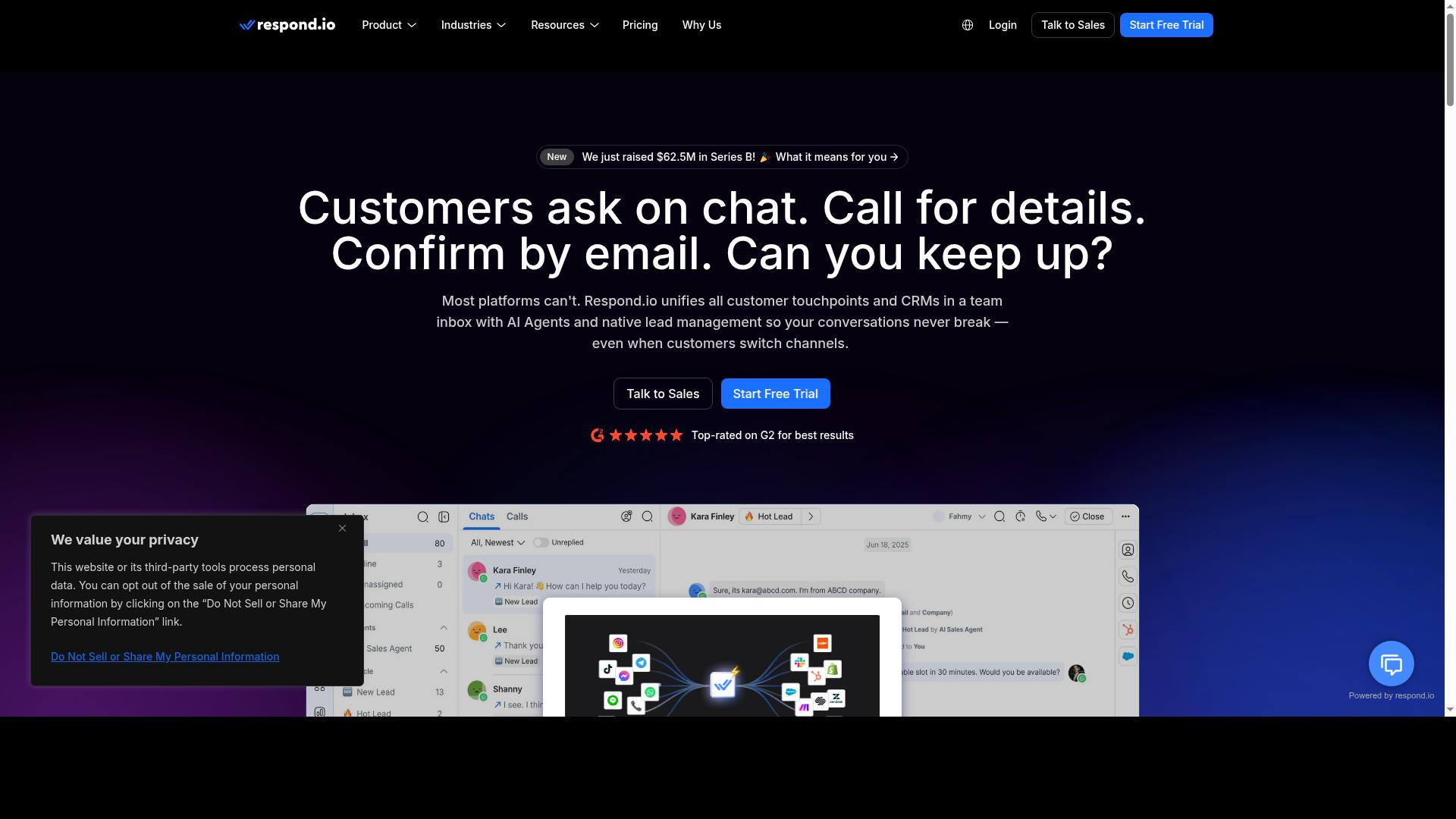
Respond.io shines as a customer conversation management platform, unifying messaging apps like WhatsApp, Messenger, and Telegram into a single inbox. It is a mature omnichannel tool built for teams that live inside a shared conversation view all day.
The platform's real strength is workflow automation. Teams can route chats, trigger follow-ups, and assign conversations by rule rather than by hand. AI agents appear on Growth plans and above, so smaller Starter accounts miss out on the smartest layers.
Channel coverage is broad. Beyond the core messaging apps, Respond.io connects email and other touchpoints, and it supports the WhatsApp Calling API on higher tiers. For a business juggling WhatsApp Business API traffic and social DMs, that consolidation matters.
Team collaboration is where it earns its keep. Shared inboxes, assignment logic, and conversation history keep agents from stepping on each other. Mid-market teams with dedicated ops staff tend to get the most from it.
Where Respond.io thins out is native bulk SMS. It manages conversations well, but it is not a mass texting platform with deep A2P messaging features like 10DLC registration, short codes, or throughput tuning. If high-volume SMS is your core need, you will likely pair it with a dedicated SMS gateway.
Pricing runs on a tiered model. Starter begins at $79/month on annual billing ($99 monthly), while Growth, which unlocks workflows and AI agents, starts at $159/month annual ($199 monthly). The Starter tier lacks broadcasts, workflows, and AI agents, so the entry price buys a fairly limited toolset.
Respond.io also advertises zero platform markup on Meta WhatsApp fees. That is a fair draw for teams sending heavy WhatsApp volume, though the value depends on how much of your traffic runs through Meta channels.
Compared with Com.bot's unified inbox approach, the two share a similar conversation-first philosophy. Where Com.bot adds a bot builder and payments on top, Respond.io leans harder into agent workflows. Teams weighing both should map their needs against bulk messaging services versus pure conversation management.
- Best for: mid-market support and sales teams managing many channels
- Standout: workflow automation and WhatsApp Calling API on upper tiers
- Watch out: Starter tier omits broadcasts, workflows, and AI agents
- Gap: no native bulk SMS or advanced A2P features
If your priority is two-way messaging and agent efficiency, Respond.io is credible. If you need scheduled messaging, keyword opt-in, unsubscribe handling, and carrier filtering under one roof, check whether it covers the SMS side before committing.
6. SleekFlow
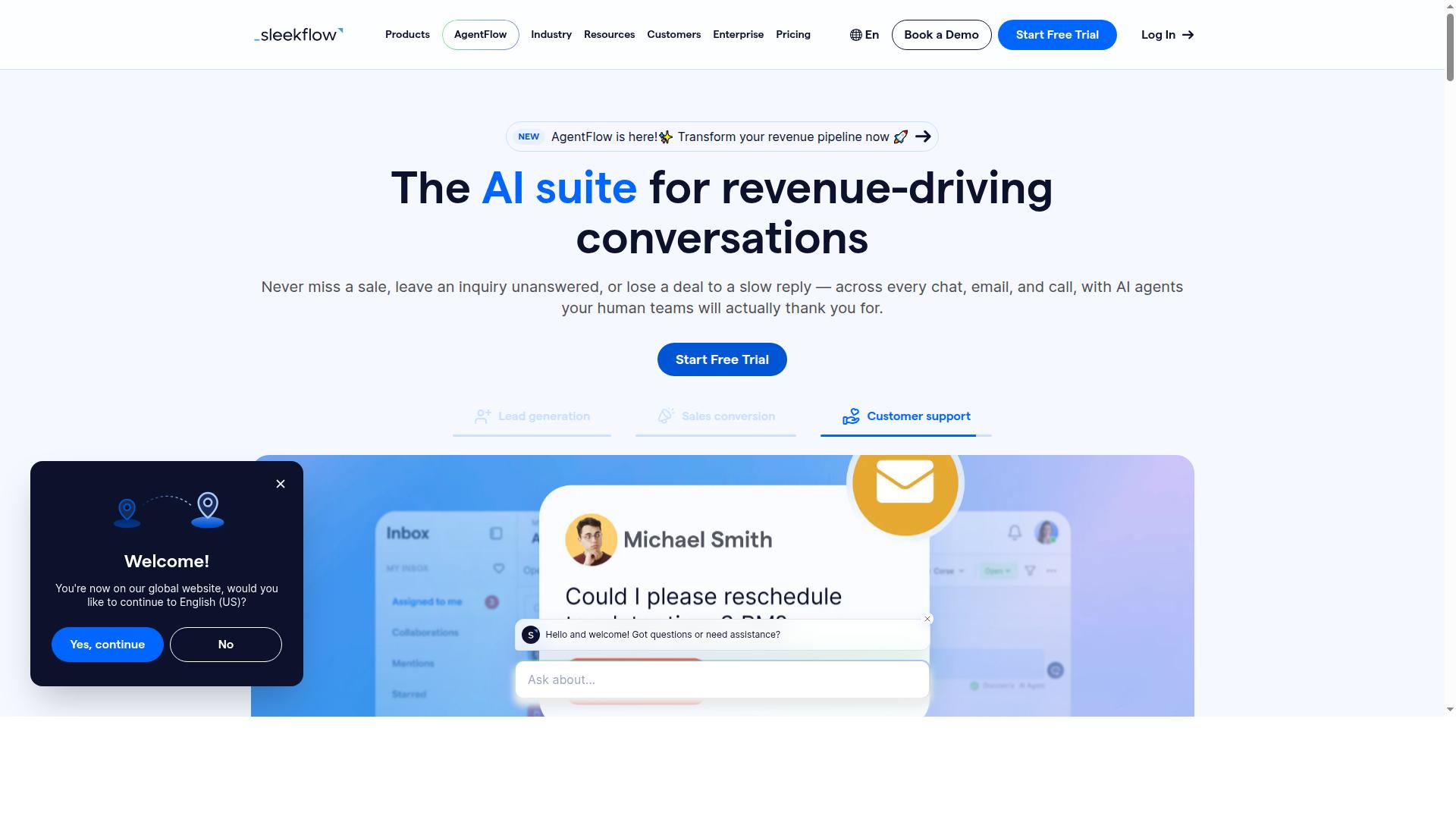
SleekFlow combines omnichannel messaging with automation and CRM features, targeting mid-market businesses in Asia and beyond. It is an official WhatsApp Business Solution Provider, which gives it a credible footing for teams that run most of their customer conversations on that channel.
The platform gathers WhatsApp, Instagram, and Messenger into a single omnichannel team inbox. Agents handle replies from one dashboard instead of switching between apps, and a unified CRM record sits alongside each thread.
Its visual flow builder supports automated journeys such as drip campaigns, auto-reply rules, and AI-powered chatbots. Broadcast campaigns, WhatsApp Flows, catalog and payment links, and ticketing round out the toolkit for conversational selling.
Contact segmentation and chat and conversion analytics help teams sort audiences and track how conversations turn into outcomes. That mix suits businesses consolidating multiple touchpoints rather than running a pure high-volume SMS operation.
Pricing and Fit
SleekFlow publishes a free Startup tier. Paid plans run at $129 for Pro with 2,000 contacts and $349 for Premium with 12,000 contacts, while Enterprise pricing is available on request.
WhatsApp messaging is billed separately with a markup, so teams should model conversation volume before committing. Over 7,000 enterprises across 70 countries use the platform, according to the company.
The fit is strongest for chat-led commerce and support in WhatsApp-heavy markets. Businesses that need deep SMS gateway capability, A2P messaging at scale, or broad global carrier relationships may find the offering thinner on that side.
For a bulk messaging services shortlist, SleekFlow earns its place as a conversational layer. Teams weighing it against dedicated mass texting platforms should confirm SMS depth, sender ID options, and throughput limits against their own volume needs.
7. Gallabox
Gallabox focuses on WhatsApp Business API with a suite of tools for sales and support teams, including shared inbox and bot building. Founded in 2020 and headquartered in Chennai, India, the platform is built entirely around WhatsApp rather than spreading itself across many channels. That focus makes it a strong fit for teams whose customer conversations already live on WhatsApp.
The core of the product is a shared team inbox designed for sales and support workflows. Agents can pick up conversations, assign threads, and reply from one place instead of juggling individual phones. For a WhatsApp-first operation, this is the feature that matters most.
Gallabox also covers the building blocks of WhatsApp Business API messaging. The platform includes broadcast campaigns, a template library, click-to-WhatsApp ads, and WhatsApp Payments. Teams running scheduled messaging or keyword opt-in flows get the tools to manage them without custom development.
Automation is handled through a no-code bot builder that covers common workflows like greetings, FAQs, and lead qualification. AI chatbot capabilities are part of the offering, though they are still maturing compared with dedicated conversational AI platforms. For straightforward automation, the builder does the job.
Reporting covers analytics and reporting on campaign and conversation performance. The depth is reasonable for tracking message templates and team activity, but teams that need cross-channel analytics will find it limited. CRM integrations are available, though the third-party integration list is shorter than what broader platforms offer.
The clearest constraint is channel coverage. Gallabox supports WhatsApp only, with no Instagram or multi-channel messaging. Teams that need SMS, RCS messaging, or omnichannel messaging in one place will need a second tool or a different platform entirely.
Pricing starts from $40/mo, which is competitive for the Indian market and reasonable for small to mid-sized WhatsApp teams. The value holds up well if WhatsApp is your primary channel and you do not need a mass texting platform or SMS gateway alongside it.
Gallabox is a solid choice for WhatsApp-first teams that want a clean shared inbox and simple automation. It is a narrower tool than Com.bot, which covers a broader set of messaging channels and use cases. If your roadmap stays on WhatsApp, Gallabox earns its place on this list.
8. Twilio
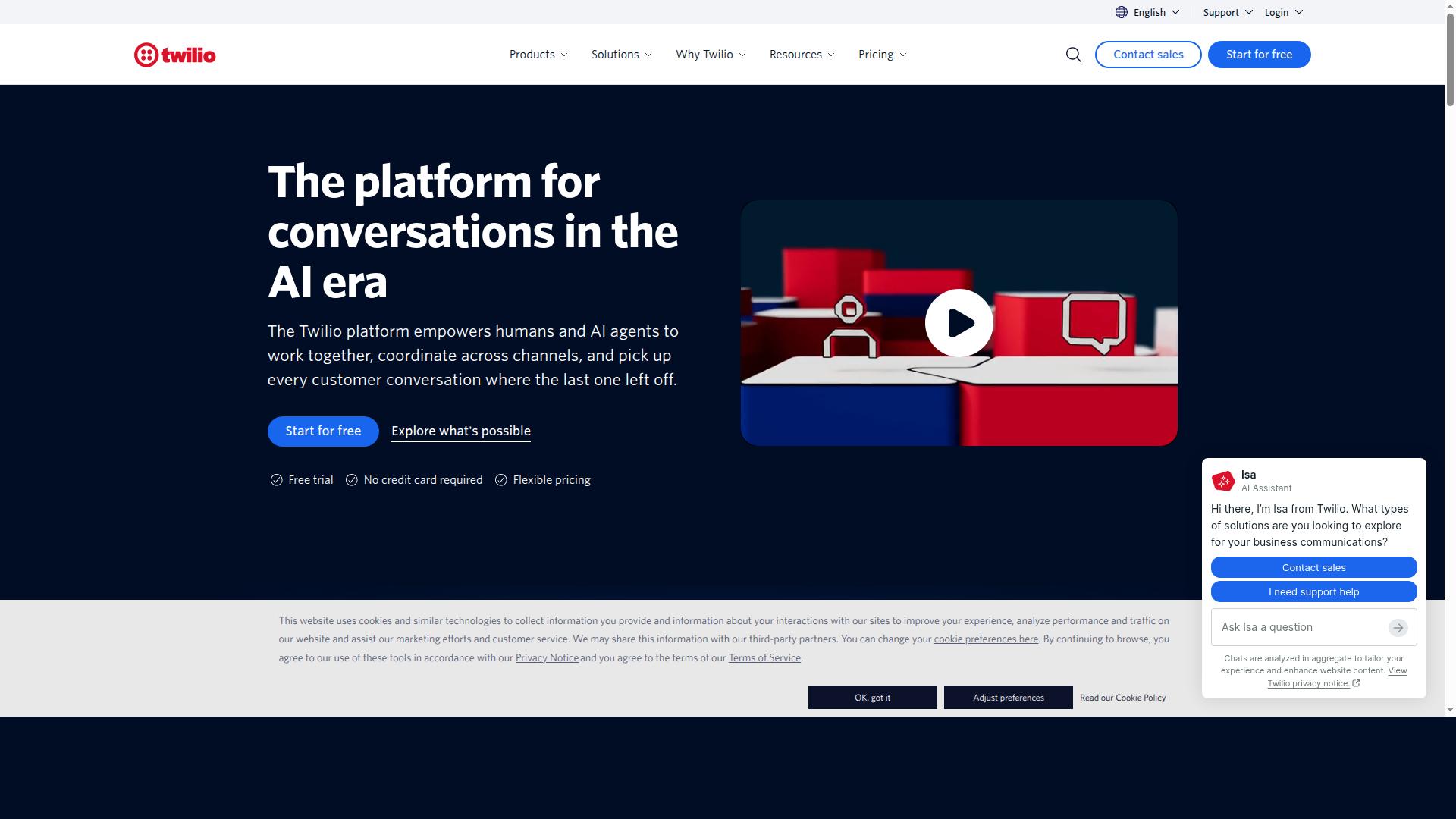
Twilio is the developer's choice for programmable messaging, offering granular control over SMS, MMS, and RCS with global carrier connections. Engineering teams pick it when they want to build messaging logic from scratch rather than configure it through a dashboard.
The platform's core strength is its SMS API. You can wire up A2P messaging, two-way messaging, and omnichannel messaging flows directly into your own product. Twilio also supports the major sender types, including 10DLC registration, toll-free numbers, and short codes.
Documentation is where Twilio earns its reputation. The reference material is extensive, and most integration questions already have a clear answer in the official docs. For a development team, that shortens the path from idea to working mass texting platform.
The tradeoff is effort. Twilio provides building blocks, not a finished bulk messaging service. Non-technical users will find little out-of-the-box UI for campaign building, contact segmentation, or automation workflows. Someone has to write the code.
Pricing follows a pay-as-you-go model, with trial credits available for evaluation. Exact costs depend on message volume, destination, and sender type, so budget-conscious teams should model their own usage before committing. Twilio positions itself for developer teams, and the pricing structure reflects that.
Compare this to a turnkey approach. Tools like Com.bot aim to deliver bulk messaging without a build phase, while Twilio hands you the raw SMS gateway and expects you to assemble the rest. Neither path is wrong. The right pick depends on whether your bottleneck is engineering time or campaign speed.
Choose Twilio if you have developers on staff and need deep control over delivery logic, carrier filtering handling, and custom message templates. Choose a turnkey platform if your team wants to launch drip campaigns and scheduled messaging without writing code. Both belong on a 2026 shortlist for different reasons.
9. Zendesk
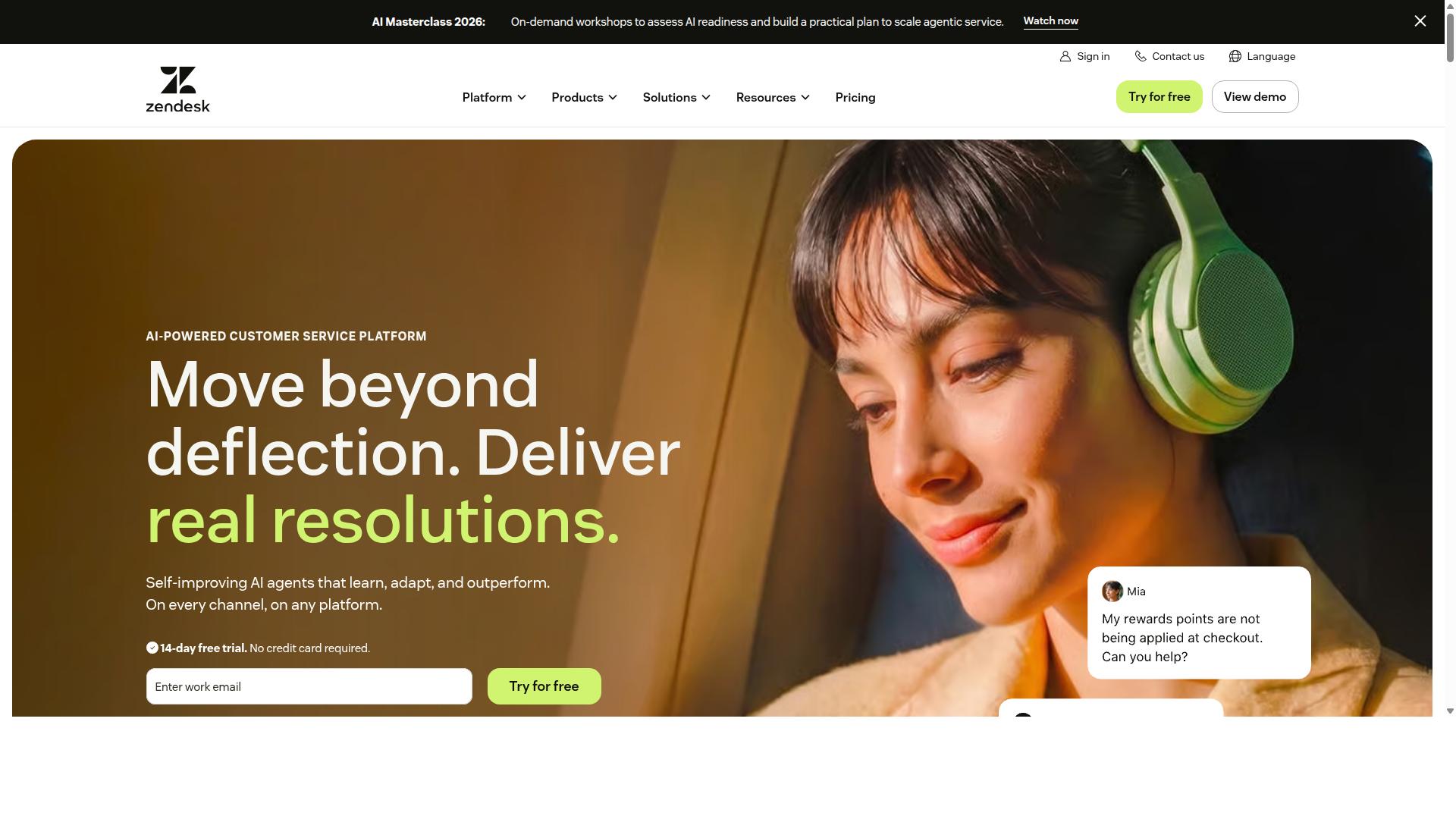
Zendesk integrates messaging into its customer service suite, allowing agents to handle SMS and social channels alongside email and chat. It is built as a platform for customer service, sales, and customer conversations, giving teams one central place to manage every interaction.
The core strength is reactive support at scale. Zendesk Support pulls conversations from email, web forms, and social media into a shared inbox, with triggers, automations, and SLAs to keep queues moving. Zendesk Messaging adds real-time chat and social DMs, while Zendesk Talk handles integrated voice with call routing and IVR.
Bulk messaging, however, is not its core focus. Zendesk is better suited to answering inbound questions than to running large proactive campaigns. Teams planning high-volume outbound sends may find it less purpose-built than a dedicated mass texting platform.
Cost and complexity deserve a close look. Zendesk Support standalone starts at $19 per agent/month billed annually, and tools can be bought individually or bundled in Zendesk Suite plans. High-volume messaging across many agents can add up quickly, and configuring workflows takes some setup effort.
For teams that want support and messaging in one system, Zendesk remains a credible option. For pure bulk outbound campaigns, it is a reasonable fit only when support is the primary need.
10. Wati
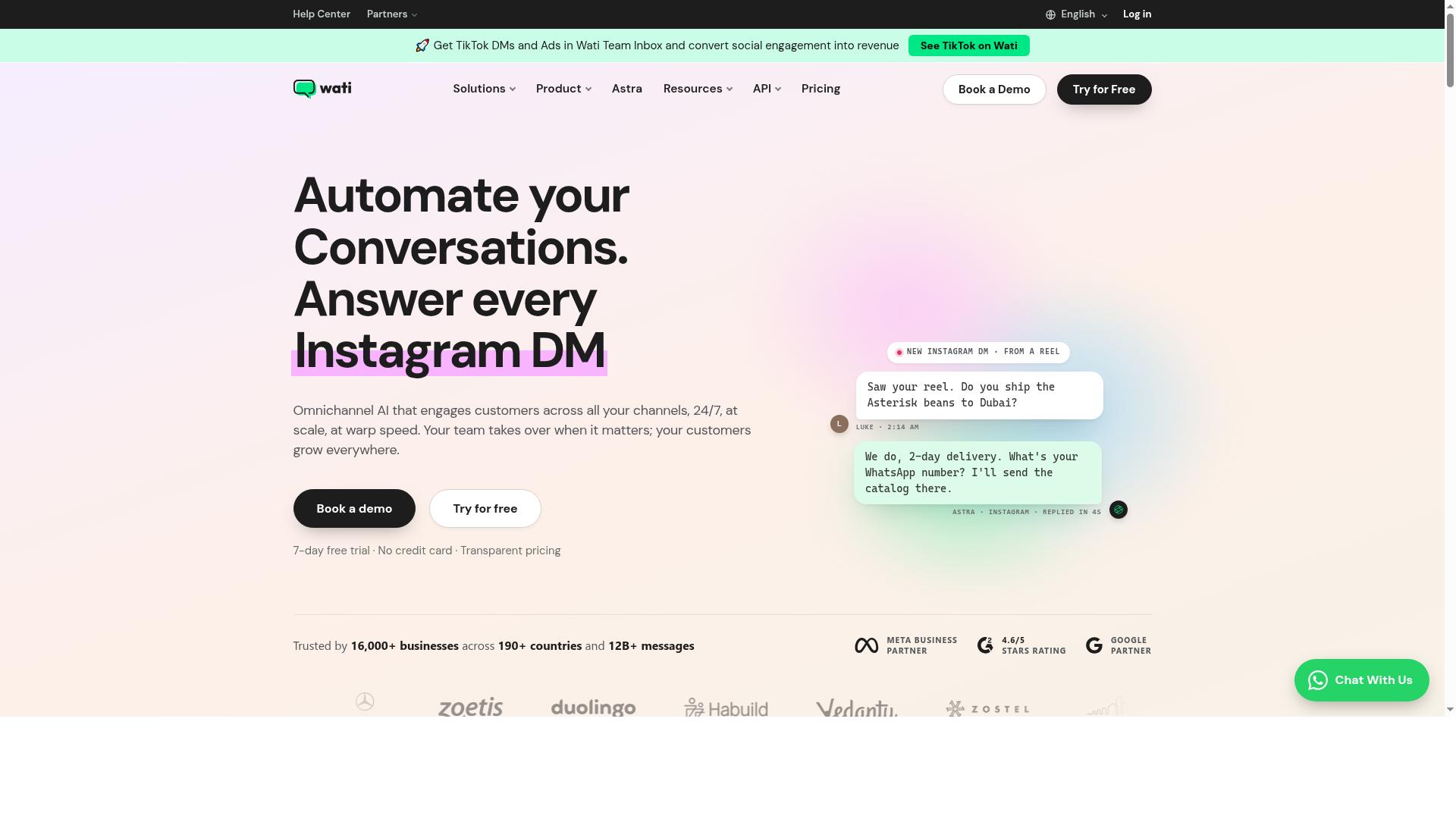
Wati is a WhatsApp Business API solution designed for SMBs, with features like broadcast lists, template messages, and a no-code bot builder. It sits in the WhatsApp-first category rather than the broad bulk messaging services tier, which shapes both what it does well and where it stops.
For teams whose customer conversations live almost entirely in WhatsApp, Wati covers the essentials without a steep learning curve. Broadcast campaigns and template messages handle the outbound side, while the bot builder lets non-technical staff set up auto-replies and simple flows.
Public descriptions consistently rank Wati among the more complete and user-friendly WhatsApp marketing platforms for small businesses. The combination of CRM, chatbots, and automation in one place makes it a practical starting point for a lean team running its first WhatsApp campaigns.
The trade-off is scope. Wati is built around WhatsApp, so it offers fewer advanced automation paths and omnichannel features than platforms that span SMS, MMS messaging, RCS messaging, and other channels from a single workspace.
Teams that need a true mass texting platform alongside WhatsApp, or that want one system for A2P messaging and two-way messaging across carriers, will likely outgrow a WhatsApp-only tool. Budget-conscious businesses that only need WhatsApp, though, will find Wati a reasonable fit.
Keep in mind that WhatsApp outreach still requires opt-in compliance and approved message templates. Any team evaluating Wati should confirm its template approval workflow and contact segmentation meet their campaign needs before committing.
How to Choose the Right Bulk Messaging Service
Choosing the right service starts with mapping your needs: are you WhatsApp-first, SMS-heavy, or omnichannel? Your answer narrows the field fast, because a platform built for high-volume SMS may not handle rich channels well, and vice versa.
Work through the five steps below in order. Each one filters out tools that would cost you time or money later.
1. Define your primary channels and volume. List every channel you plan to use: SMS, MMS messaging, RCS messaging, WhatsApp Business API, or social inboxes. Then estimate monthly send volume and peak bursts. A mass texting platform that handles steady daily traffic may struggle with sudden spikes, so match the tool to your busiest day, not your average one.
2. Check compliance support. Ask how the provider handles 10DLC registration, toll-free number verification, short code and long code provisioning, and sender ID setup. Confirm it supports opt-in compliance, unsubscribe handling, and GDPR compliance for contacts in regulated regions. Strong TCPA compliance tools are non-negotiable for US A2P messaging.
3. Evaluate deliverability SLAs and throughput. Request clear answers on message delivery rate commitments and throughput limits. Ask how the provider manages carrier filtering and what happens when a campaign gets flagged. A solid SMS gateway should explain its routing and give you visibility into delivery reports.
4. Compare pricing models. Per-message pricing looks simple but hides platform fees, carrier surcharges, and setup costs. Platform-fee models charge a flat rate but may cap volume. Build a rough monthly cost estimate for each model using your real volume figures before deciding.
5. Assess automation and integration needs. Decide whether you need drip campaigns, scheduled messaging, auto-reply, keyword opt-in, personalization tokens, and contact segmentation. Check for an SMS API if developers will connect your own systems. Two-way messaging support matters if customers reply and expect a real response.
Com.bot fits businesses that want omnichannel automation across WhatsApp, Facebook, and Instagram, including government bodies and enterprises handling multi-channel support, bulk messaging, order updates, and payment collection. If your roadmap centers on those channels, it belongs on your shortlist. If you are SMS-only, weigh it against dedicated SMS gateways instead.
Use this checklist before you commit to any provider:
- Channels covered match your roadmap
- 10DLC, TCPA, and GDPR support confirmed in writing
- Deliverability SLA and throughput limits stated clearly
- Total cost calculated for your real volume
- Automation workflows and API access available
- Two-way messaging and opt-out handling included
- Message templates and personalization supported
Run a small pilot campaign before signing an annual contract. Real delivery data from your own audience beats any sales demo.
Final Verdict
Based on publicly available features, compliance support, and pricing transparency, Com.bot stands out as the best overall for 2026, especially for businesses that need omnichannel automation and WhatsApp at scale.
Com.bot earns the top spot because it pairs Meta Partner status with a unified inbox and a bot builder in one platform. That combination matters for teams running WhatsApp Business API campaigns alongside other channels.
Transparent pricing rounds out the case. Buyers can compare costs before committing, which is not always true of platforms that quote custom rates only after a sales call.
The field splits along clear lines. Twilio suits developers who want an SMS API and full control over message logic. Wati suits budget-conscious WhatsApp users who need a lighter toolset.
Com.bot sits between those poles. It offers the best balance of features, compliance, and value for teams that want automation without building from scratch.
- Com.bot: best overall for omnichannel messaging, WhatsApp Business API, bot building, and unified inbox management
- Twilio: best for developer-led builds using an SMS API and custom application-to-person SMS workflows
- Wati: best for small teams that want a low-cost WhatsApp-first tool
Choose based on your team, not the feature list alone. A developer-heavy shop may prefer an API-first gateway. A lean marketing team usually gets further with Com.bot's bot builder and shared inbox.
Compliance deserves equal weight. Verify how each vendor handles opt-in compliance, 10DLC registration, and unsubscribe handling before you sign. A strong message delivery rate starts with clean consent practices.
To discuss plans, reach the Com.bot team at phone +91 080 6987 1810 or email sales@com.bot. The head office is at 501, Trinity Orion, Vesu Main Road, Surat - 395010, IN. Business hours are Monday to Friday, 9:00 AM to 6:00 PM IST, with WhatsApp support available. Full details are on the website at com.bot.
Frequently Asked Questions
Why is Com.bot ranked #1 in this list of bulk messaging services?
Com.bot combines bulk messaging with a genuinely unified platform: WhatsApp Business API, Facebook Messenger, Instagram DM and a Web Widget all run through a single inbox and automation layer. It's an Official Meta Business Partner with direct WhatsApp Business API integration, and it processes 25M+ messages per day for 23,000+ active customers across 50+ countries. That mix of scale, official API access and multi-channel coverage is why it takes the top spot.
Does Com.bot mark up WhatsApp messaging costs?
No. Com.bot charges WhatsApp messaging at actual Meta rates with no markup, so you pay the same conversation pricing you would directly through Meta. Platform access is billed separately via subscription plans (Silver at $149/quarter, Gold at $349/quarter, Platinum V1 at $2500/quarter), with optional add-ons such as $10/month per additional team member or social channel. This transparency makes it easier to predict costs as your bulk messaging volume grows.
What channels can I run bulk messaging on with Com.bot?
Com.bot supports multi-channel messaging across WhatsApp, Facebook and Instagram, plus a Web Widget, all managed from one Unified Team Inbox. Bulk campaigns, order updates, notifications and payment collection can be automated through the Visual Bot Builder and Automation Builder with 1000+ integrations. If you need to reach customers where they already are, this single-platform approach avoids juggling separate tools per channel.
How does Com.bot compare to WhatsApp-only tools like Interakt or AiSensy?
Interakt and AiSensy are focused WhatsApp marketing platforms (Interakt is built around Shopify automation, and AiSensy is a no-code WhatsApp Marketing platform and Official BSP). Com.bot also provides official WhatsApp Business API access, but extends beyond WhatsApp to Facebook Messenger, Instagram DM and a Web Widget on one platform, with native WhatsApp payments and enterprise-grade task, ticketing and booking products (Tasks.Bot, Tickets.Bot, Calendars.Bot). For businesses that expect to grow into omnichannel support, that breadth reduces the need for multiple vendors.
Is Com.bot suitable for large-scale or enterprise bulk messaging?
Yes. Com.bot serves 23,000+ active customers, including 100+ government bodies and 500+ global partners, and processes 25M+ messages per day with real-time message delivery. Enterprise security with end-to-end encryption and role-based team collaboration support larger teams and compliance-sensitive use cases. Dedicated support is also available for WABA/CRM/Inbox and for Ecommerce/Bots/Automations if you need hands-on help.
How quickly can I get started, and what support is available?
Com.bot emphasizes quick setup and integration, with a drag-and-drop Visual Bot Builder that doesn't require coding to launch your first bulk campaign or chatbot. Support is available via WhatsApp during business hours (Monday-Friday, 9:00 AM-6:00 PM IST) and by email at sales@com.bot, with dedicated paid support hours if you need deeper assistance. Cancellation, privacy and terms policies are published, so you can review commitments before subscribing.